
“We were all living in Brisbane, we’d all pretty much exhausted everything and weren’t doing nothing at all. We’d all lost our jobs, or our minds. We all came back to the coast and, just out of the blue, we all heard that the owner of The Time Machine was sick.
“We all came here at once, saw it was for sale, ummm yeah I dunno. Two days later, Daniel called and asked if I were keen to jump on board to start running a bloody store. [chuckle] That’s pretty much it.”
Benjamin Paskins is describing how he and two friends, Daniel Stuth and Barton Worthington, took a leap of faith in 2012, pooling their savings to take over a record and obscure music culture shop in Nambour, a small town north of Brisbane.
Though disparaged by some for being too parochial, Stuth feels Nambour has the potential to become a genuine centre of culture and, since turning their basement into a performance space, they have managed to attract bands from all over Australia and the US.
Paskins says: “That’s what makes it worth it – when you see a band poster and it’s got like Melbourne, Sydney, Brisbane and fucking Nambour. [laughs] Just seeing it like that puts a smile on my face, for sure.
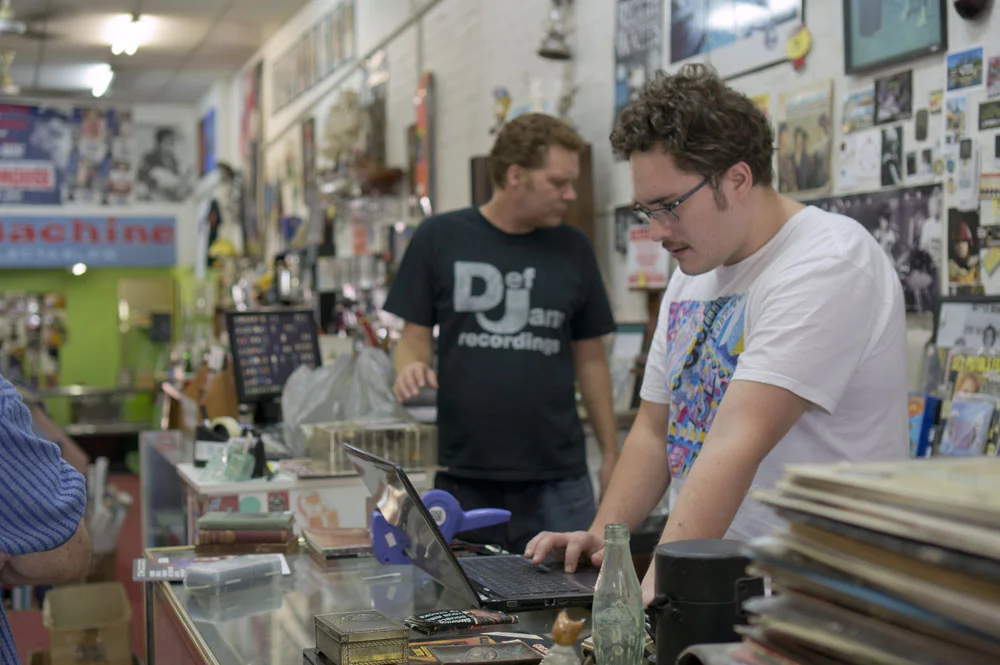
Phil Daltron (Left) (friend of The Time Machine) and Daniel Stuth (co-owner) (Photo: Joshua Watson)
“We’ve been getting a lot of people saying that The Time Machine was their favourite part of the tour. They actually get treated like human beings when they play here; they’re not just there to make money for the bar. We appreciate the music and we want it to be here.”
Stuth says: “You just get some dick-bands. I remember we had a New York band here once and they were just like: “What are we doing in this dump?”
“Like, fuck you, man. What are we supposed to be?”
When operating a niche store in a remote coastal town, the clientele is certainly varied. Stuth recalls: “Two guys look like some sort of neo-Aryan fucking Hitler Youth walked in - in their short-shorts and their wife-beaters – and the girl I guess they probably just tag-teamed was walking behind them and they’re like: “This fucking place. Bet you’ve never seen a girl in here before.” [in disbelief] “OK, what?”
“You get those strangers in here that try to start something with ya.”
Paskins says: “That’s a perfect example of how backwards the coast was. When we first came here there was still a white supremacist group in Nambour, and I was quite scared to walk at night, because I do have coloured skin. And you’d see “white power” scrawled into park benches. It’s like two thousand-and fucking-thirteen.”
This is an extreme labour of love. Gigs are promoted via handmade flyers and the guys have to work second and third jobs to keep going. “Dan works nights at a bar”, says Paskins, “I’m a dish-pig at a butcher’s and a bathroom plumber on the side.
“It really is a passion otherwise we wouldn’t do it. That’s how we get paid - from our other jobs. This is just what we like to do.”
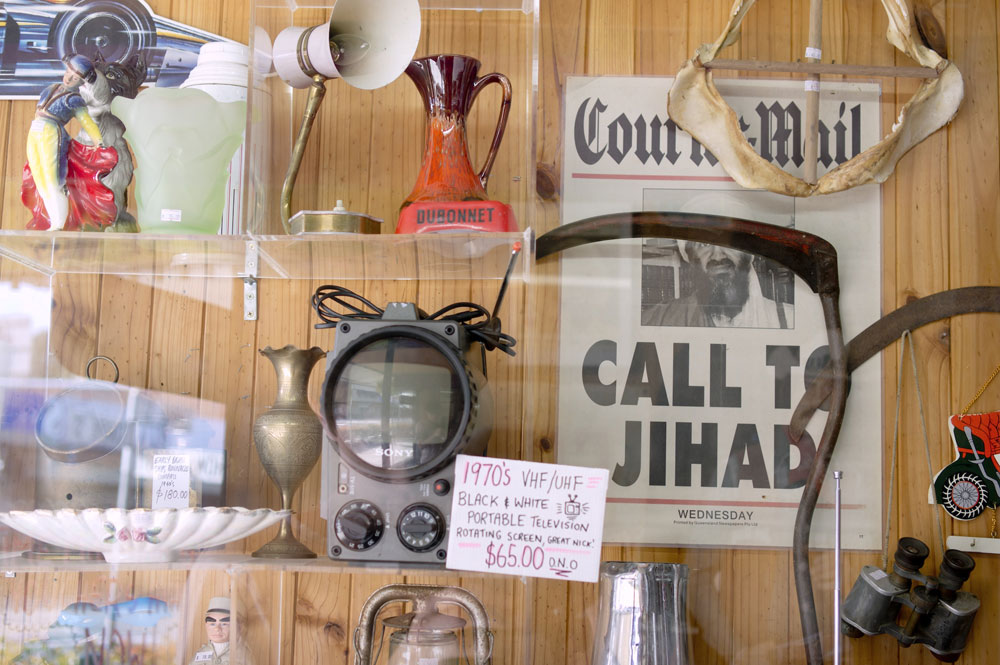
Most of us would shy away from such commitment for so little material gain. What is it about the scene that inspires such devotion?
For Brendon Annesley, the music seemed to offer purpose and meaning - a torchlight into the cave of his own bouts of nihilistic despair. For Matt Kennedy it is a "healthy lifestyle for people who don't necessarily relate to the general world.
“I've always had trouble dealing with humanity and have found it hard to get ahead in normal society. This community-based music idea empowers the broken individual and can let them do whatever they want within reason. It is freedom for weirdos and outcasts everywhere to express themselves and create a cultural shift to their liking.”
Though the outside world may associate the essence of wholesome Australia with beaches and surfers, not everyone fits into the stereotype. Paskins says: “The culture on the coast was that if you didn’t like surfing then get the fuck out.
“I never surfed. I never skated. I was never into that. If you listen to any sort of alternative music you’re a “faggot”. It was pretty hard coming back to the coast and keep that scene and keep a steady head.”
Friction can also appear within the alternative movement itself. A constant refrain in our interviews was a distaste for the word ‘scene’ for its divisive connotations - you’re in or you’re out. Paskins says: “I fucking hate that word – scenes in Brisbane are very elitist and they can make you feel like a piece of shit if they really want you to.”
One of the reasons why the loss of Annesley was so heartbreaking was that his work was proving to be a uniting force. MacLellan says: “He had built something that was just beginning to create bridges between people who would otherwise stick to their friend-circle or their chosen look or sound.”
Kennedy explains: “The most important thing he did with his writing and general behaviour was critical thought. He was extremely wise beyond his years and geographical location and he had great fun destroying these shitty mediocre Brisbane bands, as well as any other bands that caught his gaze.
“It was never done with extreme malice, but more intellectual wit, where he would explain exactly why they sucked with such bravado and hilarious eloquence it just raised the bar. He brought constructivity to what was happening and I think it made a lot of people think twice about what they were actually doing.”
Perhaps the strange atmosphere that Stern felt and why Brisbane's underground music is like nowhere else, was a symptom of this fierce commitment to freedom of expression. Channelling the spirit of The Saints and The Go-Betweens forty years ago, Annesley’s virtuosity saw him deliver truths that made people sit up and take notice. Noise, punk, drone, doom, post-rave electronica, pop-ups, zines, house gigs…they are all vehicles for this expression, elements of a cultural movement unrestricted in its nature - in music, in writing, in location, in lifestyle.
Unbeholden to material considerations or the demands of record labels, bands are free to lean into extremes, fearlessly exploring parts of the human soul that would usually remain hidden away. After all, this is the purpose of art...isn’t it?
Macho Zapp would like to thank:
Joshua Watson
Matt Kennedy
Andrew McLellan
Danny Venzin
Cedie Janson
Jimi Kritzler
Kitchen's Floor
The Slacksmiths
Matt Ford
Thigh Master
Breakdance the Dawn