
It’s midnight. You’ve turned up at an ordinary-looking house in Paddington, Brisbane…number 116. You can hear the thrashing of guitars - could be an interstate band: Naked on the Vague, the Axemen, Chrome Dome, and Mad Nanna have all played here. Inside, the rooms are crammed with people. You’re stuck in a hallway and can’t see who’s playing. But that’s ok, you’ve brought a goon sack [a bag or cask of wine] or a tally of VB [a long-neck beer], someone is passing round a joint and you’ve scored some pingers [ecstasy] for later.
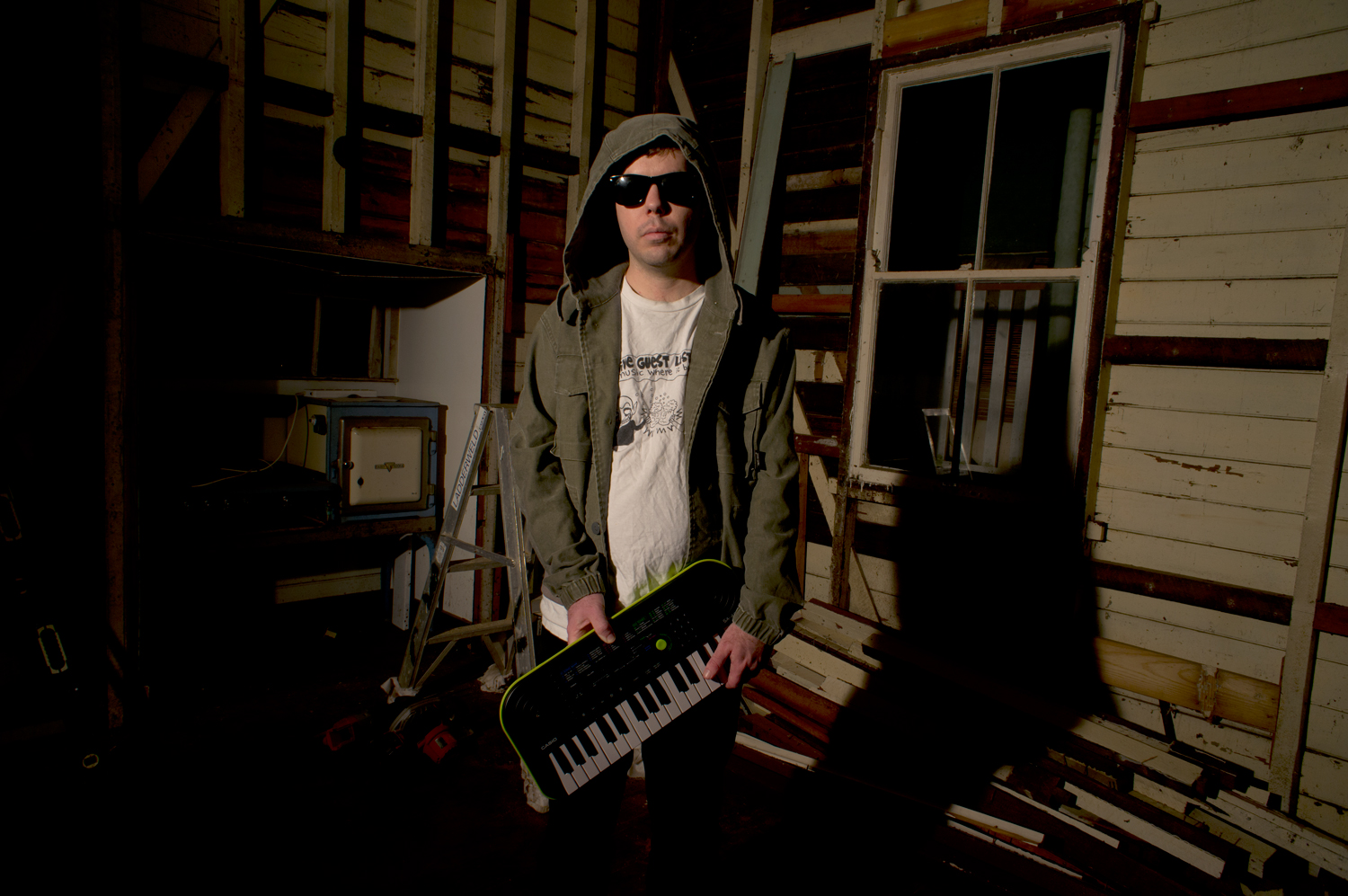
Matt Kennedy in '116' (Photo: Joshua Watson)
One of the intriguing things about the Brisbane scene is the gig venues. The excessive police scrutiny and lack of venues in the 70s and 80s created a tradition of hosting live performances at houses or taking them to parks, under bridges, or to disused buildings. Today this serves to maintain tensions with authorities which, as Kennedy suggests, keeps the scene healthy. Tension or not, the freedom of dislocation adds a romanticism to the music.
Kennedy says: “The final show I held in that lounge room was on my 28th birthday last June with Scraps, Brainbeau and Club Sound Witches. It was a wild night and a worthy farewell to eight years of house shows.
“Things had become a bit too nuts a few years ago where people were showing up who weren't there for the music and would ruin it by being jerks. It became more stress than fun so I stopped doing them for a while.”
Watson recalls: “They'd start in the early evening and ended whenever Bobby Bot (the Wonderfuls) finally left. House shows were always much better than going to a bar, much more relaxed. ”
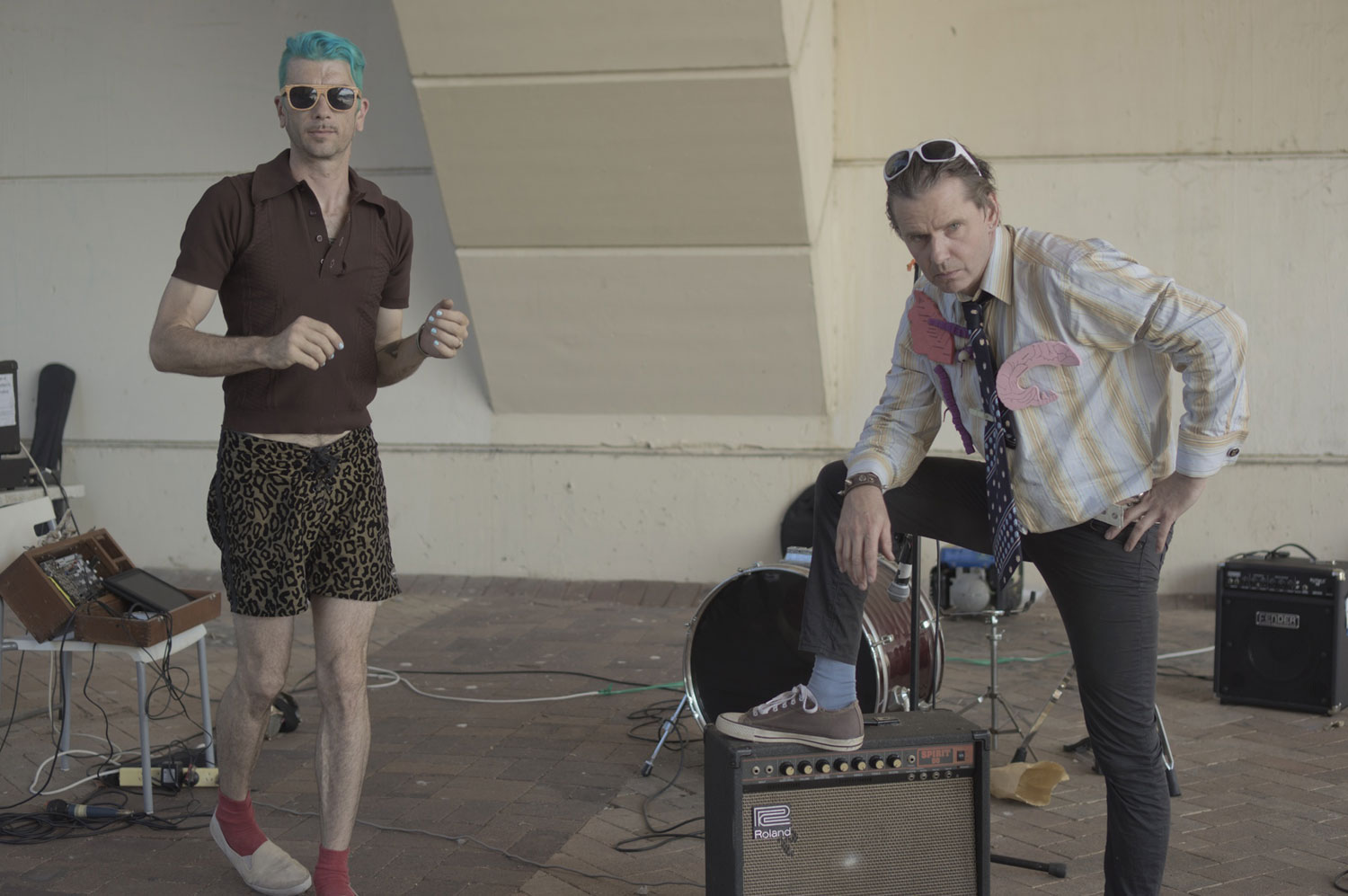
Dracopede (Left) and Gerald Keaney (organiser, activist, philosopher) at the Solar Powered Guerilla Gig under the William Jolly Bridge, Grey St. South, Brisbane (Photo: Joshua Watson)
“The most brutal gigs are those like 12-hour 'fests' that start in the afternoon and just never seem to end. Late-night jams after shows were always the best. Joel Stern [an art curator and musician] would always instigate something like that and we'd stay up until morning drinking, smoking and playing vuvuzelas to Casio drum machines.”
Gigs also take place in shops according to Watson: “I think the first "underground" gig I went to was Matt Horseshit in a tiny bookshop in West End.”
Daniel Stuth, co-owner of The Time Machine - a record and pop-culture store in Nambour - describes the immense heat at some of the gigs they host: “That’s the thing I think I love though - just embracing the sweat. It smells like Big Day Out [festival] urinals in there and you just run with it.
“You walk outside and you go: “That was sick!” and your ears are ringing and you’re searching for your beers ‘cause someone has just nicked them out of the fridge. It’s the whole experience that makes it fun too.”
Sometimes the venues are not strictly legal, as Jimi Kritzler, the writer and musician, remembers: “There was an abandoned cinema in the next neighbourhood and we decided for our first show we might as well break in and play. It was wild and fun.”
Kennedy says the allure can be irresistible: “There's always that excitement of playing somewhere other than a standard venue. If you can find an abandoned house or cinema or building it's always fair game, as long as you have a generator to power the amps and the guts to do it. That still happens quite a bit, namely under bridges or in parks which have seen some great generator shows over the last few years.”
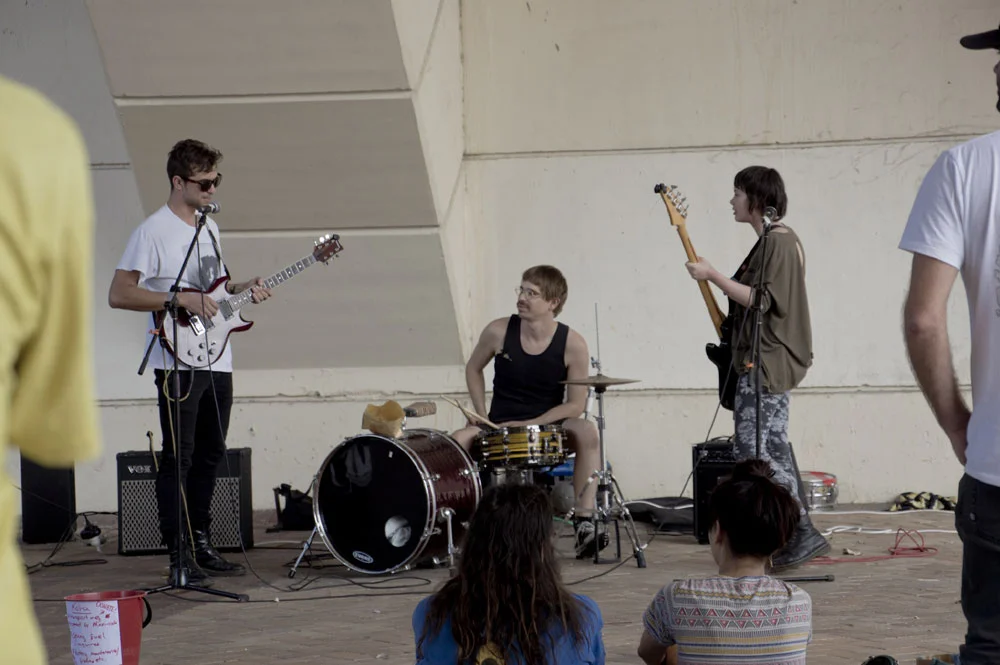
'The Slacksmiths' play at the Solar Powered Guerilla Gig under the William Jolly Bridge, Grey St. South, Brisbane
These gigs welcome experimentation. McLellan remembers a regular Sunday night called Audiopollen Social Club (2006-8) that would prove inspirational to the likes of Blank Realm and Cured Pink: “It wasn't unusual to have a near-silent jazz-tradition free-improvisation trio share a bill with a touring grindcore band, a doom drone soloist, and a whacked-out electronic DIY beats duo.
“It wasn't ‘anything goes’ strictly speaking, but I haven't really seen that level of freedom awarded anywhere else. You could really fail at what you were trying and it was the best place to do so.”
Audiopollen was not your regular gig night. It dared to test the very structure of performance, questioning the paradigm of music consumption at its most fundamental level; the relationship between musican and audience.
In Watson’s Brisbane 2012, founder of Audiopollen, Joel Stern said: “The audience got involved in everything in a really intense way - not just heckling but there was a lot of participation in projects.
"Someone would be playing and they would kind of respond to provocation from the audience and start playing in another kind of way, or would stop playing and start talking. And the talking would somehow be part of the same process as the playing.”
This kind of experimentation is possible largely because no one is in it for the cash. “There's really no gold carrot being dangled on the chain for anyone in Brisbane”, says Danny Venzin.
“If you want to make music here, it has to be for art's sake because, unless you are a super-commercial band, nobody is interested in signing you and nobody will pay you more than a few dollars to play a show.”