
Pictured: Theon Cross (Photo credit: Zuri Jarrett-Boswell)
"At the time I didn’t realise how unusual it was!", laughs Theon Cross.
"Because I’d always been doing the outside carnival thing, tuba wasn’t that uncommon. But it wasn’t until I started getting into more traditional, more standardised jazz, that I realised it was a bit more unique."
Rarely do you come across tuba players, but even rarer are rising stars like 23-year-old Cross. Part of his development, he says, was to understand his role - how he fitted into the music.
"I started learning walking basslines and things like that. But what inspired me first was lots of brass bands – that was my way in and then went back and started listening to lots of other brass bands such as Rebirth, Dirty Dozen, things like that…and learnt the vibe of how those bands played it.
"After that I started going to workshops and was interested in jazz. I wanted to learn how to improvise basically and play a groove."
Currently planning a follow up to his 2015 EP, Aspirations, he is proving that the instrument can reliably get heads nodding and remains in demand on the live circuit, playing in a number of jazz bands around London including Sons of Kemet and The Moses Boyd Exodus.
Who would be the influences for a jazz-loving tuba player?
"Oren Marshall, who I studied with at Guildhall Youth, was obviously a big influence. The musician who put the tuba in my hand and who was a big influence on me was Andy Grappy, who basically started me off.
"Other people like Bob Stewart from the States, Howard Johnson, Philip Frazier from Rebirth Brass Band, Kirk Joseph from the Dirty Dozen, John Sass; there are quite a few."
The Journey
For Moses Boyd, the journey to providing the intense percussion for Binker and Moses' award-winning debut album, Dem Ones, began at secondary school. Under the tutelage of jazz drummer Bobby Dodsworth, who introduced him to the sounds of 60s drummers Tony Williams and Elvin Jones, Boyd caught the bug and would spend lunchtimes and breaks practising.
At college he realised his friends, brothers Theon and Nathaniel Cross, were also trying to be jazz musicians and together they would go to The Roundhouse in north London every Sunday for a workshop led by Leon Michener.
“We trekked from Catford to Camden every week”, says Boyd, “and that kind of became the jazz thing. Once we could get into clubs we started to go to Ronnie Scott’s and all sorts of places - jam sessions wherever we could for years."
“You’re like the master architect of the band or performance really.”
In this way he gradually learnt the dynamics and musicianship of drumming: “You listen to the Meters and how Zigaboo [Modeliste] is able to pull the groove back. A great drummer can do that. And that’s what they’re meant to do. They’re meant to assess the musical situation on a macro level, second by second.
"Someone’s slightly pushing; do you go with it or go against it? Do you keep it locked? Do you build it here? Do you hold it off? You have to shape the whole thing. You’re like the master architect of the band or performance really.”
Al Ryan believes improved education is a big factor in this new era of jazz. "When I was growing up", he says, "you had to scrounge around for old books and try to talk to people and educate yourself. Whereas now you come out of school, you go off to university for three or four years, and you come out with a degree in jazz, specialising in performance.
"I think that's why we're seeing, suddenly, a wash of new talent coming along and the stuff that these people are coming up with is just extraordinary."
Vocalist Emma Smith was always surrounded by the music. Her grandfather played with Frank Sinatra and he has come to be the biggest influence on her. “I grew up listening to stories about being on tour with Tom Jones and stuff. And my father was a composer. He did ‘Friday Night Is Music Night’ at the BBC for years, an amazing musician. He met my mum at NYJO (National Youth Jazz Orchestra), which is where I started in my groundwork, and where Amy Winehouse first got her training and Jamie Cullum, and people like that."
“I went to the Purcell school of music and studied jazz there and I went to the Royal Academy of Music where I was the first female vocalist to get accepted onto that course there. And that was hugely influential for me, being considered to be an instrumentalist but happening to use my voice for those purposes.”
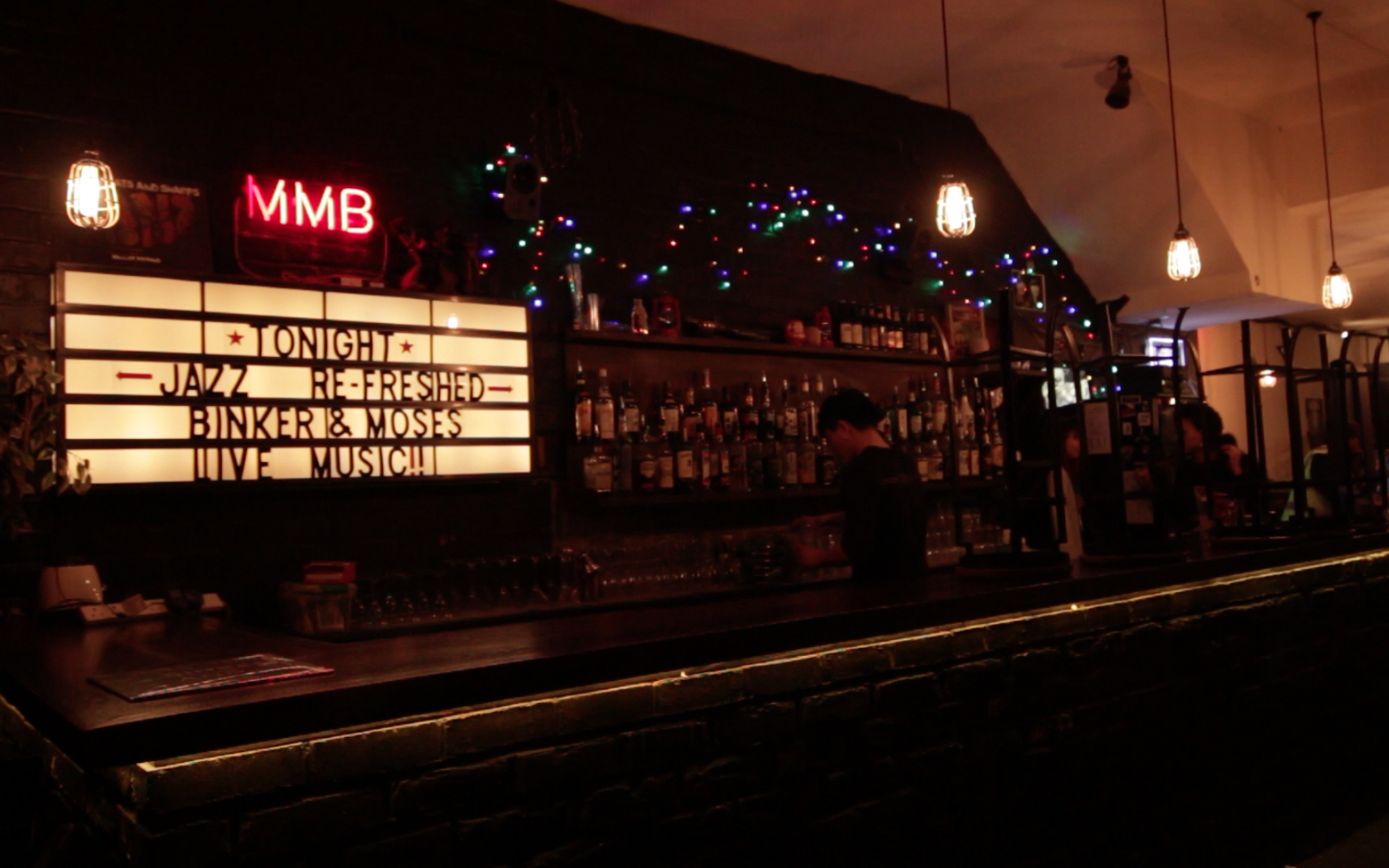
Jazz Refreshed at Mau Mau, London
She believes New York, so often seen as the home of contemporary jazz, has an important influence over the scene in the UK.
“It’s almost like that large amount of water separating us from New York has become invisible and there’s a huge melting pot of different cultures and different influences, and a lot of New York guys playing with UK guys over here.”
Is this new front in jazz partly a rebellion against the army of wet-behind-the-ears laptop producers?
“I don’t necessarily think it’s because more people can become laptop producers.”
Boyd believes technology has only helped: “I mean I can’t speak for America or other places in the world but here it’s definitely very progressive. So you do find great bands who use electronics, myself included. I don’t necessarily think it’s because more people can become laptop producers. I think that’s a good thing, personally.”
Smith also thinks electronic music has been a positive influence with bands like Snarky Puppy and Bill Laurance heavily using synthesisers.
“However”, she says, “I do think there is a thirst for more authentic improvised music that is a backlash against the electronic music pop scene. It’s about using those skills and applying them to new improvised music from a jazz heritage.”
New York bands like Mister Barrington are a good example of mixing old and new. Their brand of funk and jazz is heavily reliant on laptops but within that framework there is a great deal of complicated improvisation and experimentation involving compressor gates and controllers.
LA Effect
We should also not ignore the influence of Los Angeles’ Brainfeeder label, under which the heralded 32-year-old experimental instrumentalist, DJ and rapper Flying Lotus has brought a jazz sensibility into electronic music with his avant-garde poly-rhythms (he is the grand-nephew of saxophonist and jazz legend, John Coltrane) paving the way for the more straight-up jazz sound of Kamasi Washington, not to mention the future funk of Dam Funk on LA’s Stones Throw label.
In addition, acts such as Canadian trio Cobblestone Jazz have transferred live improv, most often seen in jazz, to the world of techno and this has contributed to bringing jazz back into the consciousness.
In response, Manchester’s GoGo Penguin have produced their own unique brand of minimalist piano-driven electronic jazz. Recently nominated for a Mercury Music Prize for their second album ‘V2.0’, they have now signed to the most famous jazz label in the world - Blue Note Records.
Boyd thinks there are differences between the UK and America: "They have a lot of progressive jazz and a lot more traditional jazz but the difference being a lot of the masters who did create this music are still there. Some of them are still alive so they’re a lot closer to the source so to speak. Whereas here we don’t have that.
"But we have something different. The UK is a lot more culturally integrated than America, so I find that British bands tend to be a lot more diverse, if that makes sense, musically and conceptually, in all sorts of ways. And that’s the big difference I think, maybe that does affect the sound but it’s more to do with a social-economic setup rather than musicians - why the music sounds different."